Yodlee Review 2025: Is This Financial Data Platform Right for You Or Choose SnapTrade?
By Kristina Wallace · Published September 9, 2025 · Updated September 2026

Yodlee stands as one of the original pioneers in financial data aggregation, shaping the industry since 1999. With connections to over 17,000 global data sources and serving more than 1,400 financial institutions, it has become the go-to solution for enterprises seeking comprehensive financial data across every account type imaginable. From banking and credit cards to investments, loans, and insurance, Yodlee provides the infrastructure that powers financial insights for 15 of the top 20 U.S. banks.
To create this Yodlee review, I've analyzed the platform extensively. I believe it's the ideal choice if:
- You need comprehensive coverage across major financial account types
- You're an enterprise with resources for implementation and management
- You require advanced data enrichment and analytics capabilities
- You value established relationships with major financial institutions
- You need a solution examined by U.S. Federal Banking Agencies
However, Yodlee's comprehensive approach might be more than you need if:
- You're focused specifically on investment accounts and brokerage connectivity
- You need embedded trading capabilities, not just data aggregation
- You're a developer or startup looking for quick implementation
- You prefer transparent, accessible pricing without extensive sales cycles
- You want a modern, developer-friendly API experience
In this case, you should consider SnapTrade: a specialized API built specifically for connecting to retail brokerage accounts. While Yodlee covers the entire financial spectrum, SnapTrade focuses exclusively on investment accounts, providing both data aggregation and embedded trading capabilities through a developer-friendly platform designed for rapid integration.
Because of that, I've included a detailed look at SnapTrade later in this Yodlee review, as the specialist alternative for teams building investment-focused applications. If you're ready to explore focused brokerage connectivity, you can start building with SnapTrade for free here.
Table of contents:
What is Yodlee?
Yodlee was founded in 1999 by a team of entrepreneurs including Venkat Rangan, Sam Inala, and Schwark Satyavolu, with backgrounds at companies like Microsoft. The founders recognized the need to simplify consumers' online financial lives by providing a single, consolidated view of all their financial accounts.

What began as a free service for consumers to aggregate their accounts evolved into a B2B platform serving financial institutions. In 2015, Envestnet acquired Yodlee for $660 million, integrating its data aggregation capabilities into wealth management platforms.
Most recently, in June 2025, Symphony Technology Group (STG) announced its acquisition of Yodlee, signaling renewed investment in product innovation and technology modernization.
Today, Yodlee aggregates, enriches, and analyzes financial data to thousands of financial institutions globally to provide actionable insights through APIs. Its core offerings include data aggregation, account verification, transaction enrichment, and predictive analytics.
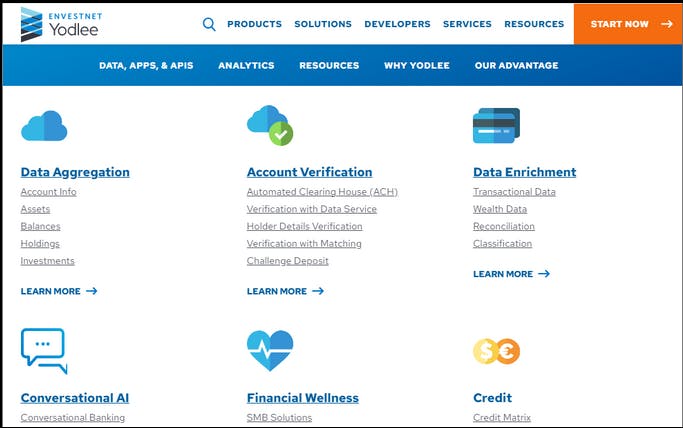
Yodlee serves large financial institutions, wealth management firms, and established fintech companies that need reliable and secure access to customer financial account data. These organizations value Yodlee's extensive network, decades of experience, and enterprise-grade protocols.
Yodlee Pros & Cons
| Pros | Cons |
|---|---|
| ✅ Extensive data network with 17,000+ global sources | ❌ Complex implementation for simple use cases |
| ❌ Complex implementation for simple use cases | ❌ Custom pricing consultations required; limited public pricing transparency |
| ✅ Regulated and examined by federal banking agencies | ❌ Older technology stack compared to newer platforms |
| ✅ Advanced AI-powered data enrichment | ❌ No securities trading capabilities |
| ✅ 25+ years of industry experience and relationships | ❌ Higher barrier to entry for startups despite free tier |
Yodlee Review: How it Works & Key Features
Comprehensive Data Aggregation
Yodlee's data aggregation service forms the foundation of its platform, connecting to over 17,000 global data sources. This includes banks, credit unions, credit card companies, investment accounts, loan providers, insurance companies, and utility providers.
It supports connections across North America, Europe, Australia, New Zealand, and South Africa.
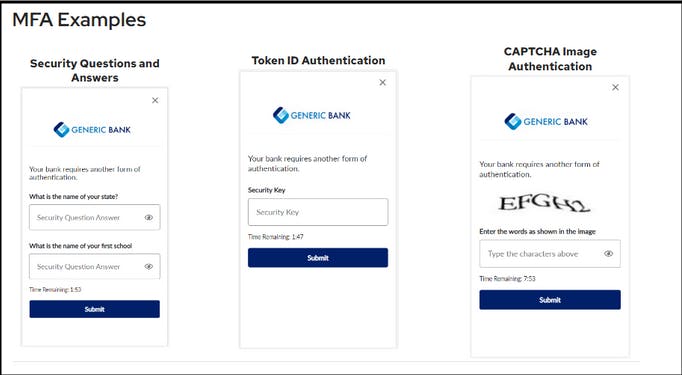
The aggregation process begins with FastLink, Yodlee's drop-in module for account linking. Users search for their financial institution from the extensive list, enter their credentials through a secure interface, and complete any required multi-factor authentication. The platform supports various authentication methods including OAuth, security questions, one-time passwords, and token-based verification.
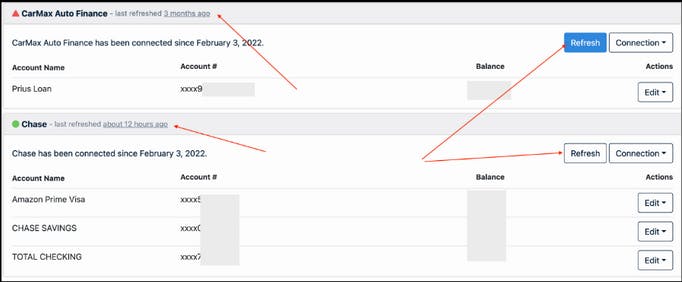
Once connected, Yodlee aggregates data from checking and savings accounts, credit and charge cards, investment accounts including 401(k) and IRAs, mortgages and auto loans, insurance policies, and utility bills. It conducts daily automated refreshes for active users, with frequently changing accounts updated every 24 hours. Less active accounts follow a graduated refresh schedule, with updates every three days, weekly, or bi-weekly depending on usage patterns.
Transaction Data Enrichment
Yodlee's Transaction Data Enrichment (TDE) service transforms raw, cryptic transaction data into clear, actionable information.
Raw transaction strings from financial institutions often contain confusing combinations of letters, numbers, and abbreviations that users struggle to recognize.
The enrichment process employs AI and machine learning algorithms trained on billions of transactions. The system identifies merchants from ambiguous descriptors, assigns transactions to specific spending categories, adds simple human-readable descriptions, and provides geolocation data for transactions.
Transaction types are differentiated between purchases, refunds, payments, and transfers, while the platform identifies recurring transactions like subscriptions through its Insights capabilities.
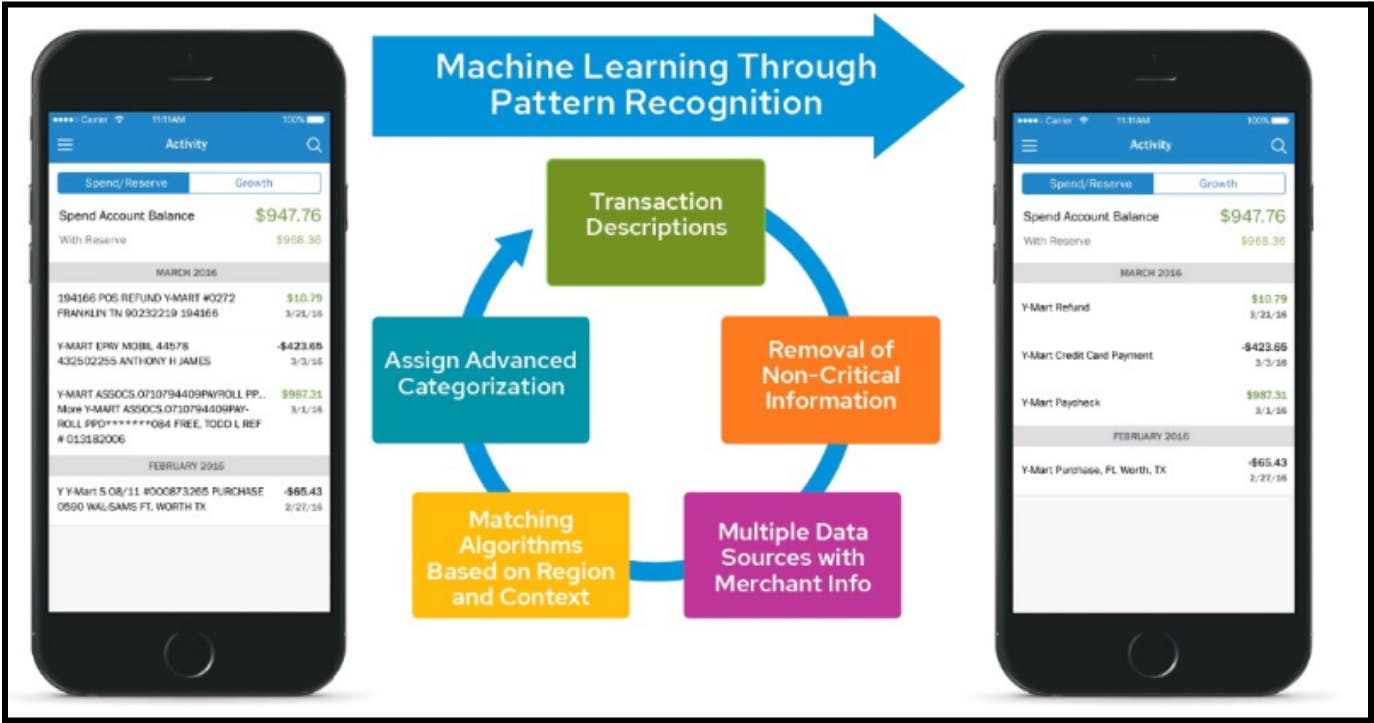
This enrichment happens automatically as part of the data aggregation process. Financial institutions using Yodlee report operational benefits from clearer transaction data that reduces customer confusion. The enriched data also enables more sophisticated analytics and personalized financial insights.
Financial Insights Platform
The Insights solution combines actionable consumer insights, peer benchmarking data, and personalized views delivered through Financial Insights APIs. It analyzes patterns in income, spending, saving, and borrowing to detect notable events and trends.
Key capabilities include peer benchmarking, which compares user spending against anonymized peer groups with similar income or geographic profiles.
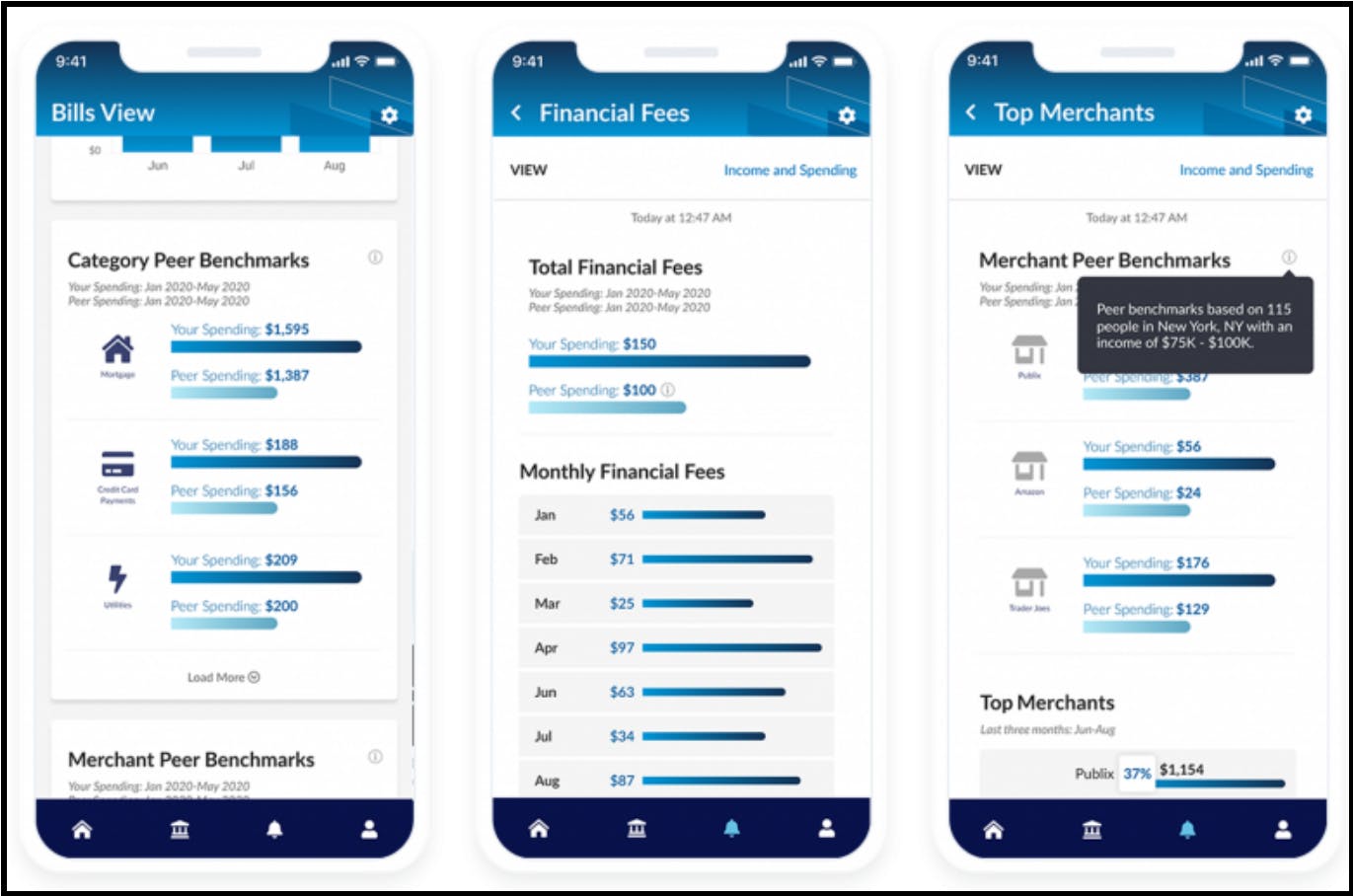
The system generates future projections including cash flow forecasting and balance predictions based on recurring transactions and income patterns. Personalized recommendations suggest savings opportunities and relevant financial products based on user behavior.
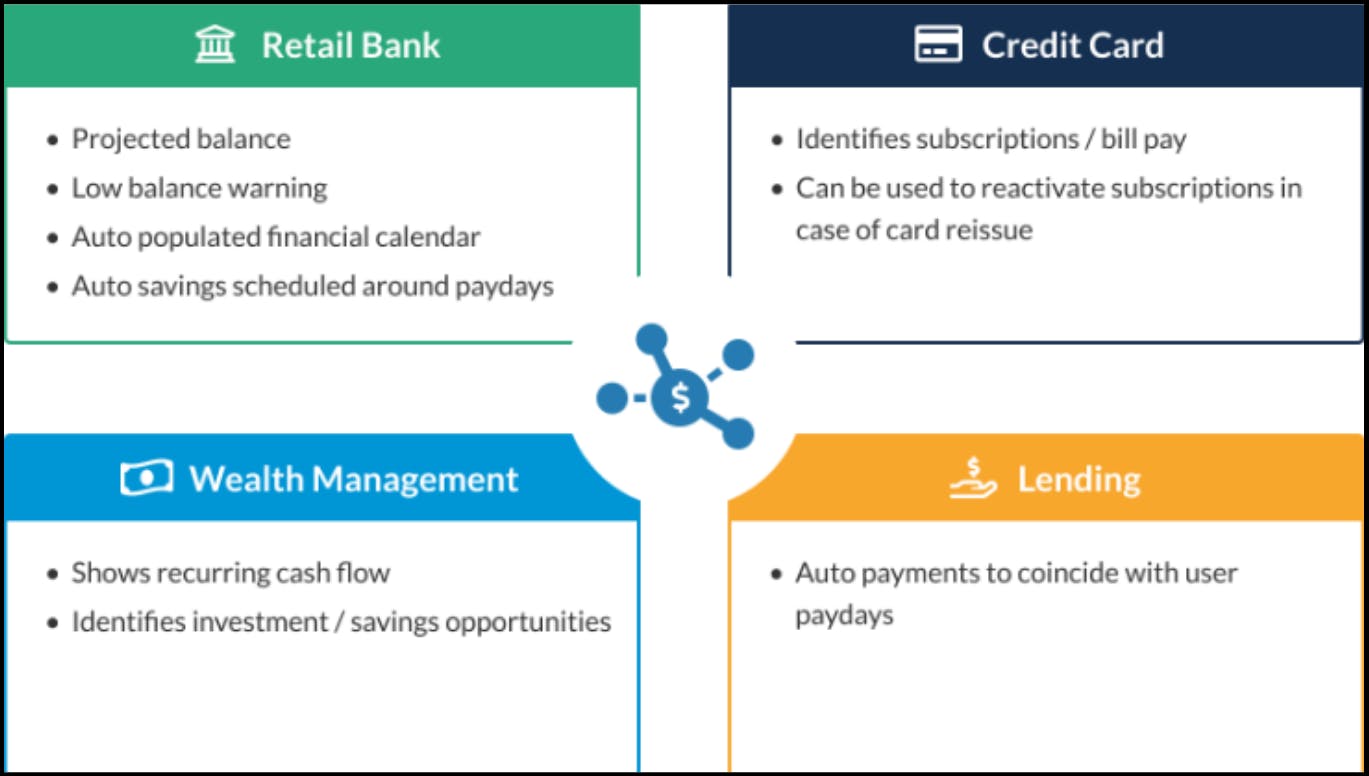
These insights are delivered through RESTful APIs, giving developers complete control over the user experience. Financial institutions can configure which insights to offer, how they're delivered, and when they appear. The API-first approach allows seamless integration into existing channels including mobile apps and websites.
Enterprise Infrastructure
Yodlee's infrastructure is designed for enterprise use, with security and compliance controls that meet U.S. banking regulatory standards.
The platform undergoes examination by the U.S. Federal Banking Agencies under the Bank Service Company Act. Data security includes encryption in transit using TLS, with credentials requiring RSA encryption.
The API architecture provides multiple endpoints for different functions: /accounts for account information, /transactions for transaction history, /holdings for investment positions, and /providers for supported institutions. Webhook support enables real-time notifications for account updates and data refreshes.
Developer resources include a comprehensive portal with documentation, sandbox environment for testing, OpenAPI/YAML specifications for SDK generation in multiple programming languages, and Postman collections for API exploration. The platform has been actively modernizing its developer experience with regular updates and improvements through 2024 and 2025.
Where Yodlee Falls Short
While Yodlee excels at comprehensive financial data aggregation, several limitations become apparent for organizations with specific investment-focused needs. These constraints reveal a platform optimized for breadth over specialized depth.
The platform's extensive functionality can be complex for teams that only need brokerage connectivity.
Organizations focused solely on investment accounts must navigate enterprise-grade infrastructure designed for comprehensive financial services. Recent developer feedback shows implementation experiences vary, with FastLink generally reducing integration complexity, though some developers still report challenges with the multi-step integration process.
Yodlee's APIs are designed for data aggregation without securities trading execution capabilities.
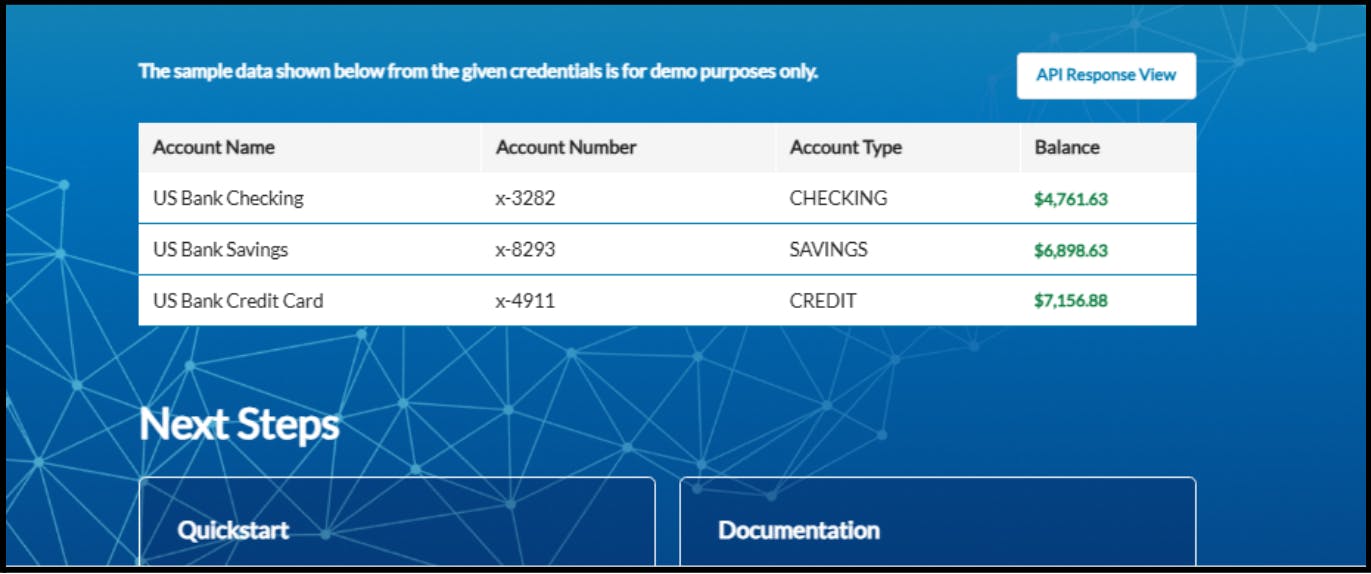
For fintech companies building active investment platforms, this limitation means they cannot enable users to execute trades directly through the API. This forces a fragmented user experience where analysis happens in one platform while trading requires switching to another.
The developer experience reflects Yodlee's enterprise heritage, though the company has been actively modernizing its platform through 2024 and 2025. While they've improved their developer portal navigation and documentation based on community feedback, the platform still carries the complexity of serving enterprise-scale needs across all financial account types.
Yodlee requires custom pricing consultations through sales teams, which can slow down evaluation for organizations needing quick decisions.

These limitations aren't failures but natural consequences of building for enterprise scale and comprehensive coverage. They create opportunities for specialized solutions focused on specific use cases like investment account connectivity and embedded trading.
Top Yodlee Alternative for Brokerage Connectivity: SnapTrade
SnapTrade addresses specific limitations in investment-focused applications by providing a specialized API built for retail brokerage and cryptocurrency exchange connections. Built by the team behind Passiv (founded in 2017), SnapTrade was launched as a product in 2022 after five years of firsthand experience with the complexities of brokerage integrations.
Specialized Brokerage Focus
Yodlee connects to 17,000+ financial sources across all account types.
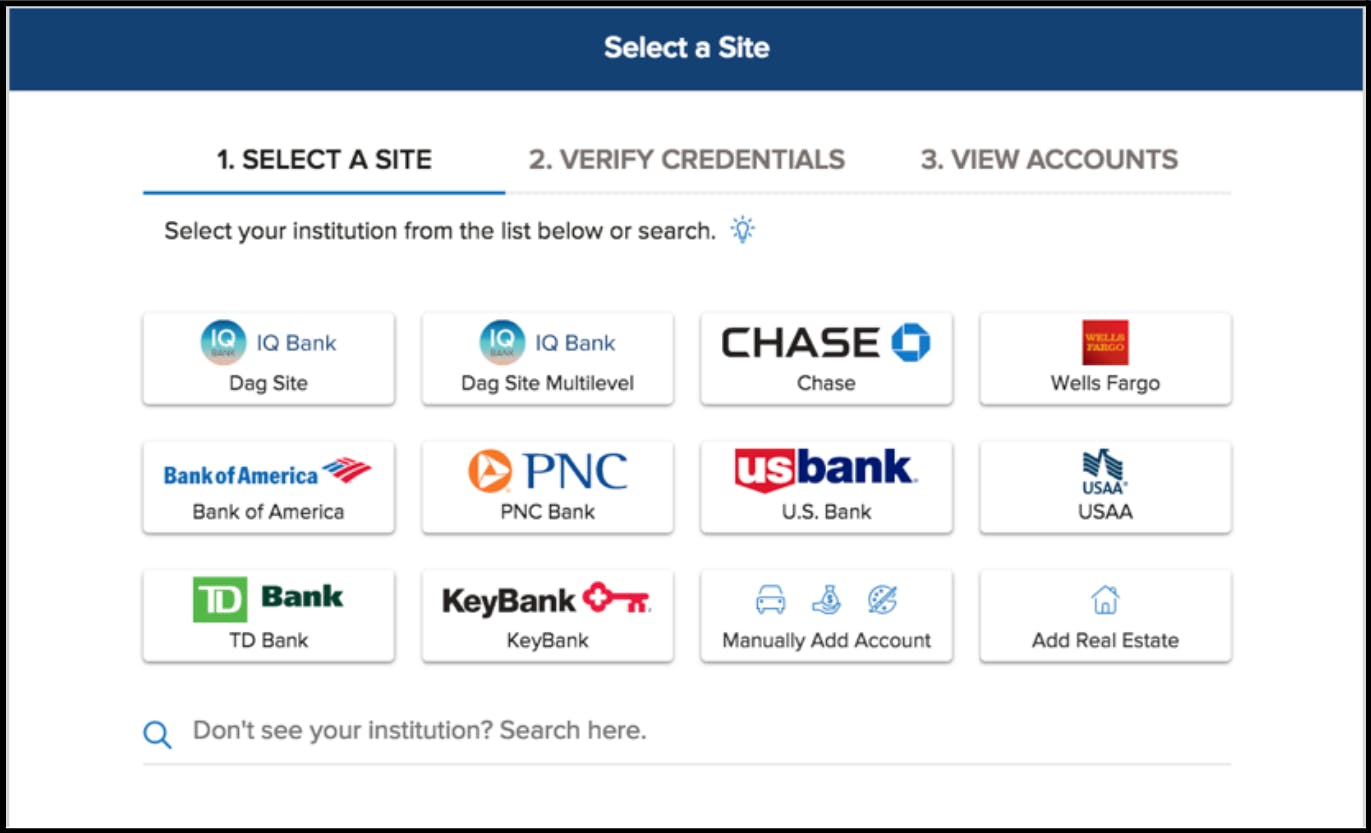
On the other hand, SnapTrade focuses on 40+ brokerage integrations.
This specialization includes connections to Fidelity, Robinhood, E*TRADE, Charles Schwab, Interactive Brokers, Questrade, Coinbase, and Kraken. SnapTrade also supports neo-brokers and modern trading platforms like Webull, Public, Trading 212, and Degiro.
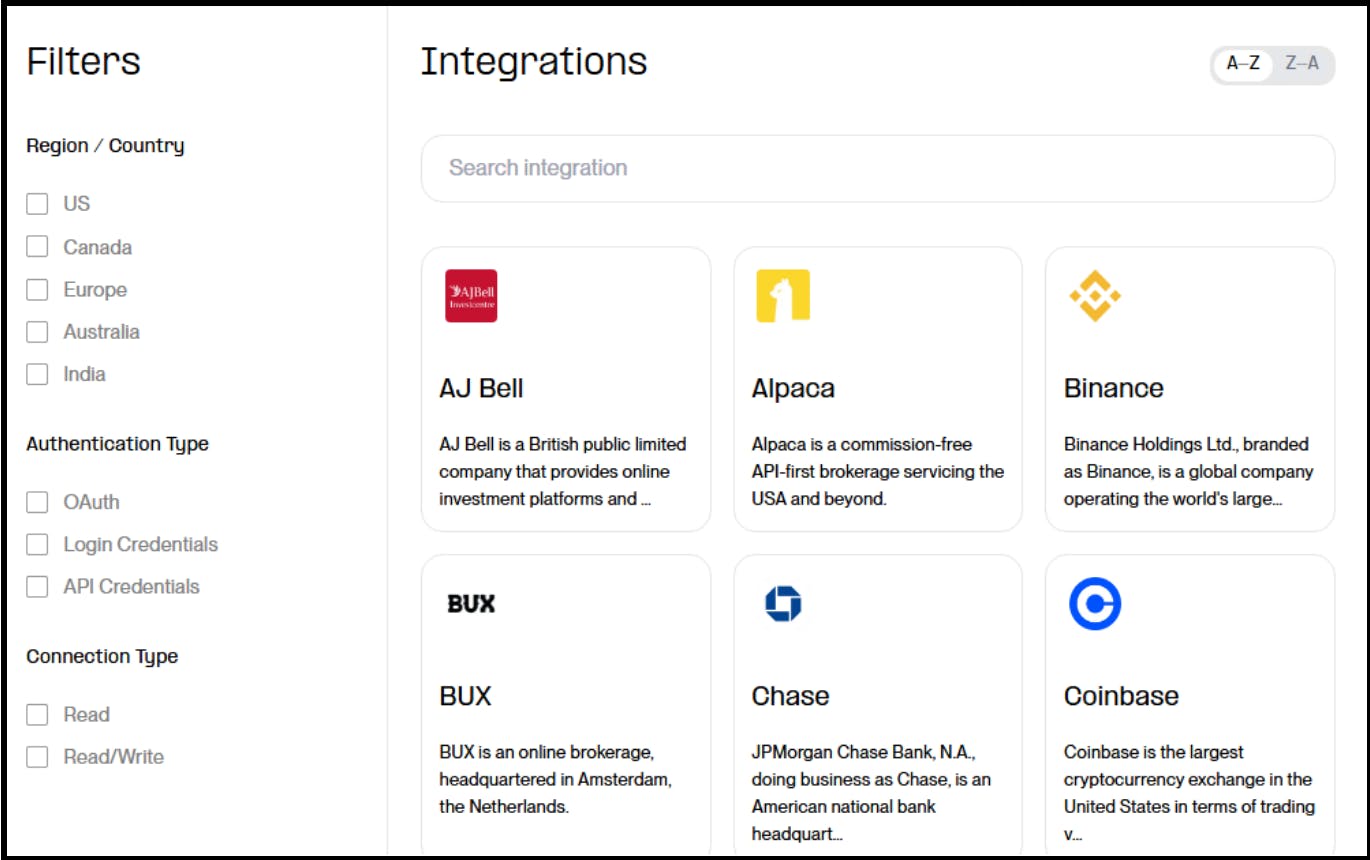
This focused approach enables deeper functionality for investment accounts. SnapTrade provides unified, structured data and maintains persistent connections with over 95% success rates, reducing re-authentication friction.
The platform allows developers to retrieve fresh account data through configurable syncs and provides visibility into open orders that users have placed in their brokerage accounts, showing not just what users currently own, but what trades they have queued.
Embedded Trading Capabilities
Unlike Yodlee's data-only access, SnapTrade offers the ability to place trades directly through the API on supported brokerages. While not the only platform with this capability (others like TradeIt also offer trading), it's a key differentiator for building complete investment experiences within applications.
The trading capabilities support multiple asset classes including stocks, ETFs, cryptocurrencies (beta), and options with expanding support for single and multi-leg strategies. Order types include market orders, limit orders, stop orders, and stop-limit orders.
Before executing trades, developers can use the trade impact simulation feature to preview how orders would affect user portfolios without actually placing them.
Trade placement happens programmatically through simple API calls specifying the account, security, quantity, and order type. The platform provides a universal symbol system to help ensure consistent security identification across different brokerages.
Developer-First Experience
SnapTrade prioritizes developer experience with modern API design and comprehensive support.
The platform provides SDKs in seven programming languages: Python, TypeScript, Java, C#, Ruby, PHP, and Go. These SDKs handle authentication complexity and request signing, allowing developers to focus on building features.
Additional support options are available for Custom customers. The company performs connectivity testing with real accounts to ensure smooth connection flows and works closely with clients to understand their specific needs.
Documentation includes comprehensive API references and step-by-step integration guides with actual code examples. The getting started guide walks through making first connections, pulling account data, and placing trades.
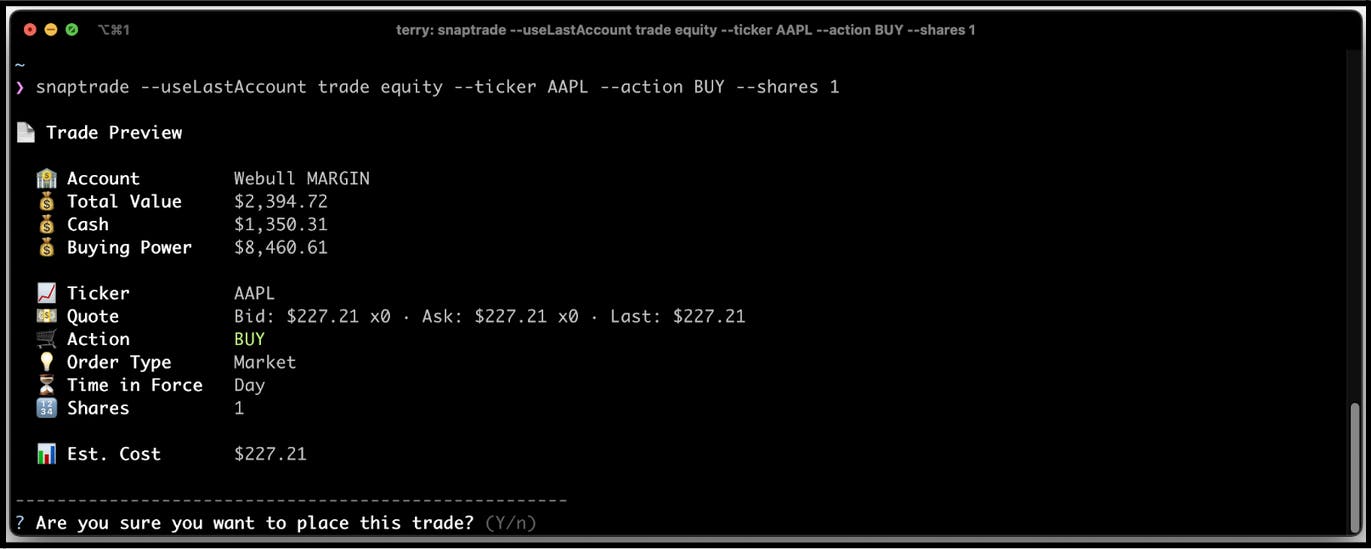
SnapTrade also includes a command-line interface.
It's available as an npm package that enables developers to interact with the entire API ecosystem directly from their terminal. The CLI streamlines the development workflow by allowing developers to quickly test account connections, execute trades, and validate data flows without building a full frontend interface.
With commands for everything from broker connection management to live trade execution, developers can prototype and debug their integrations more efficiently, while the tool's support for both live and paper trading accounts provides a safe environment for testing trading logic before production deployment.
Extended Historical Data and Reliability
SnapTrade retrieves historical transactions going back as far as each brokerage allows, often providing years of history rather than the standard two-year lookback period common with other aggregators. This extended access supports portfolio analysis, tax reporting, and long-term performance tracking.
SnapTrade's specialized focus allows developers to reduce the complexity of building direct integrations to multiple brokerages. The platform handles brokerage API changes, though documentation notes that broken connections require user action to fix through a reconnection flow.
Transparent and Flexible Pricing
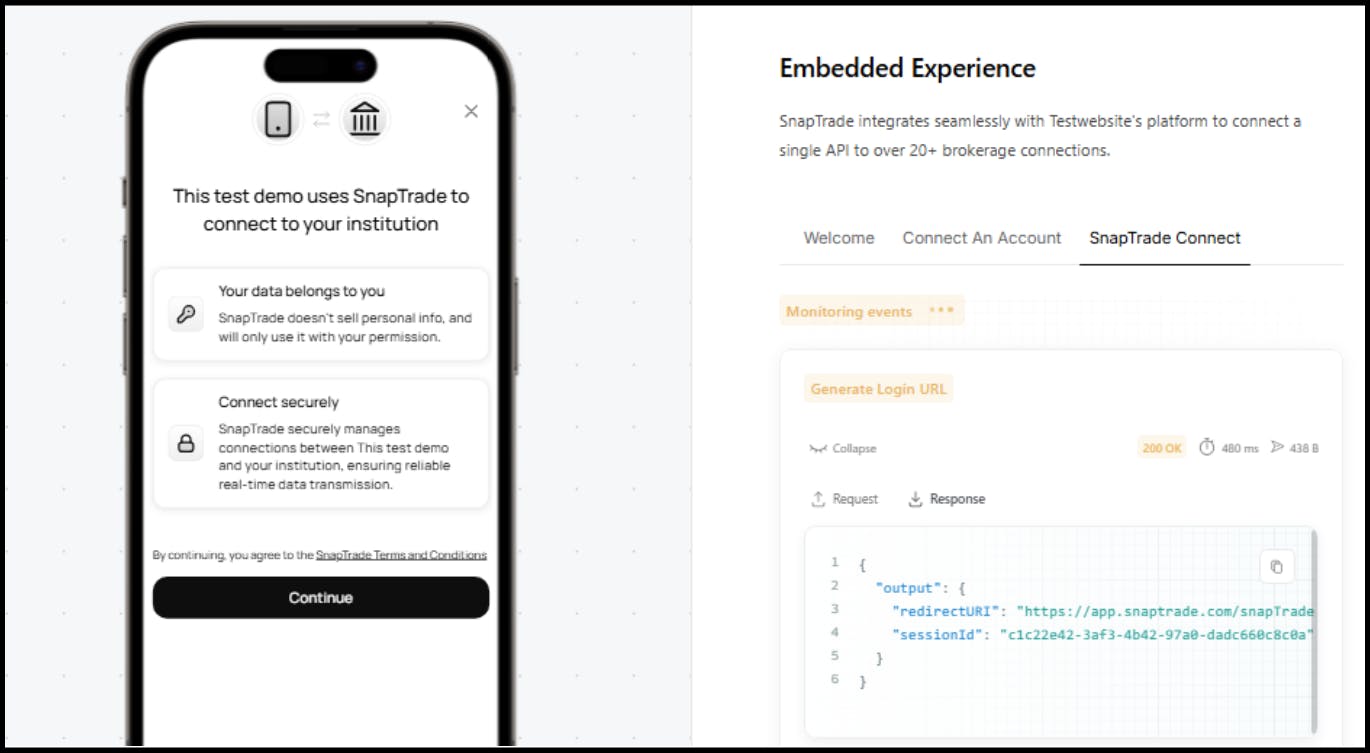
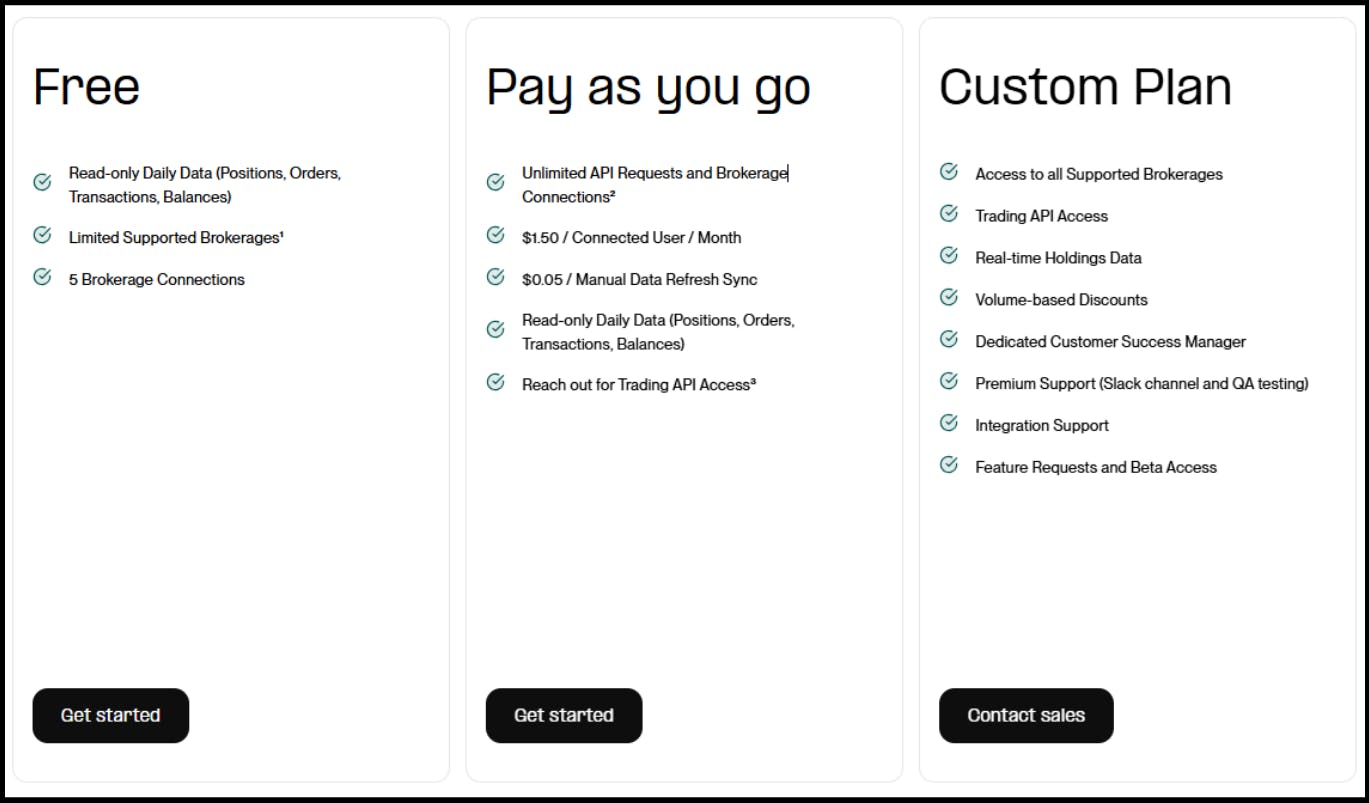
SnapTrade publishes pricing for developers on its website.
Build is $0 for development and testing. Launch is $100/month plus connected-user usage: $2 per API connected user/month for Real-time or $1 for Daily. Daily API manual refreshes are $0.05 each. Apps can also support SnapTrade Personal users through OAuth, who currently have introductory $0 connected-user pricing while the $100/month Launch platform fee still applies.
Custom pricing is available for apps that need volume pricing, higher limits, additional support, or other requirements beyond Launch. This lets developers start building for free, then move to published Launch pricing when they are ready for production.
Yodlee or SnapTrade: Comparison Summary
| Feature | Yodlee | SnapTrade |
|---|---|---|
| Primary Focus | Comprehensive financial data aggregation | Specialized brokerage connectivity |
| Account Types | All (banking, credit, investments, loans, insurance) | Brokerage and crypto exchanges only |
| Number of Integrations | 17,000+ global sources | 40+ brokerage integrations |
| Data Quality | General enrichment across all account types | Structured data for investment accounts |
| Real-Time Access | Standard refresh cycles | Configurable data syncs |
| Historical Data | Standard lookback periods | Extended history per brokerage limits |
| Trading Capabilities | ❌ No securities trading | Trading where supported by the brokerage and connection |
| Target Audience | Enterprise financial institutions | Developers and fintech startups |
| Developer Support | Documentation and enterprise support | Additional support options available with Custom |
| Pricing Model | Limited public pricing; primarily enterprise contracts | Published Build, Launch and Custom pricing |
| Implementation Time | Weeks to months | Days to weeks |
| Best For | Complete financial data infrastructure | Investment-focused applications |
Final Verdict
The choice between Yodlee and SnapTrade depends fundamentally on the scope and focus of your financial data needs.
👉 Choose Yodlee if you're building comprehensive financial services that require visibility across all account types. It's the right solution when you need banking data alongside investments, when regulatory examination and established compliance are mandatory, when you're serving large financial institutions with complex requirements, or when you need advanced analytics and insights across complete financial profiles. The platform's extensive network and decades of experience provide the infrastructure for full-spectrum financial applications.
Check out Yodlee here.
👉 Choose SnapTrade if your focus is specifically on investment accounts and trading capabilities. It's ideal when you're building portfolio tracking or analysis tools, when you need users to execute trades within your application, when you're a developer or startup needing quick implementation, or when you want transparent pricing without extensive sales cycles. The specialized focus on brokerage connectivity (particularly with modern platforms like Webull and Public) combined with dedicated developer support makes SnapTrade a strong choice for investment-focused innovation.
If you're looking for brokerage connectivity, you can start building with SnapTrade for free here.
Both platforms excel in their domains.
Yodlee provides the comprehensive foundation for enterprise financial services, while SnapTrade delivers specialized tools for investment applications with advantages like embedded trading and transparent pricing.
Your choice depends on whether you need broad financial data coverage or deep brokerage functionality with the ability to execute trades directly through your application.